





Liga.net
Інформаційний портал орієнтований на широку аудиторію, що цікавляться діловою та суспільно-політичною інформацією.
Опубліковано 10 Липня 2026
Ukraine needs smart Ukrainian economic protectionism
Reconstruction is about creating conditions where investment is made in small businesses, and it is more profitable for an entrepreneur to work at home than in the European Union.
After the Ukraine Recovery Conference (URC), I was left with mixed feelings.
On the one hand, the state performed at a high level. The official Ukrainian delegation looked professional, confident, and substantive. Once again, we proved that even in wartime we are capable of being a strong partner for the world.
At the same time, the conference laid bare another problem: we are either in a crisis of economic ideas, or we do not know how to present and sell those ideas — even to ourselves.
Today, Ukraine offers its international partners mainly two areas: the defense industry and energy. These are, without question, critical to the country's survival. But an economy cannot run on two sectors alone.
Any modern state is strong when it has a broad entrepreneurial base — when thousands of companies across different industries are developing simultaneously. It is they who create jobs, competition, innovation, and the tax base.
The European Investment Bank finances small and medium-sized businesses across Europe to the tune of roughly €100 billion a year. For Ukraine, we are currently talking about mere hundreds of millions.
And the problem goes far beyond the war. The problem is that the financial system itself has not yet learned to work with the Ukrainian entrepreneur as they are today.
Banks still think in terms of collateral. But what can an entrepreneur who evacuated their business from Kherson, Melitopol, Kupiansk, or Kramatorsk offer as collateral? Their main asset today is not real estate. Their main asset is experience, a team, clients, technology, and the ability to adapt quickly.
This is exactly what new financial products should be built around. Unfortunately, for now we are seeing something else.
International guarantees are often used merely to slightly reduce collateral requirements under old lending models. That does not create a new economy. It only makes old mechanisms a bit more comfortable.
What Ukraine needs are entirely different solutions. Entrepreneurs need fast, adaptive financial instruments that reflect the realities of a wartime economy.
The same applies to the insurance market. When Ukrainian insurers explain that they cannot insure war risks, a simple question arises: how do insurance companies operate in Israel? How do they operate in countries that regularly face natural disasters or other systemic risks?
A market cannot develop only in the absence of risk. On the contrary — its job is to learn to manage that risk.
That is what international reinsurance mechanisms, guarantees, risk-sharing schemes, and joint programs with international financial institutions exist for.
This is how new markets are created. And this is precisely what Ukraine lacks today.
Another important takeaway from the URC is that we focus too much on big business. It remains, of course, an important part of the economy. But large companies have already passed through the main stage of their development.
The real growth potential lies in the micro, small, and medium-sized business sector. That is where future national champions are born. That is where the companies may emerge that, in five to ten years, will become new exporters, employers, and taxpayers.
But without capital, this will not happen. The evolutionary path from a small company to a large business can take twenty years. Ukraine does not have twenty years. We need an accelerator.
That accelerator must be financing, modern financial products, and a willingness to invest in entrepreneurs before they become big.
Because large companies rarely show multifold growth. It is those just beginning to scale who are capable of delivering it.
There is one more figure that gives pause. Last year, in Poland alone, 13,000 Ukrainians opened new businesses. And it is precisely they who will become the new major exporters, employers, and taxpayers. This means the problem is not a lack of entrepreneurs. The problem is that they are realizing their business ideas outside Ukraine.
Together with these businesses, future jobs, taxes, innovation, and economic growth are moving abroad.
The key question now is no longer whether international partners will find the money for Ukraine. They are ready to provide financing. The question is different: will we learn to create new investment opportunities? Will we be able to see potential where today there is still only a small company? Will we start financing the future leaders of the economy before they become leaders?
The answers to these questions will determine what the Ukrainian economy looks like after victory. Because countries do not win by receiving the most aid. They win by converting it, better than anyone else, into the development of their own entrepreneurship.
Ukraine needs smart Ukrainian economic protectionism.
We must remain as open as possible to foreign investors, joint ventures, technology partnerships, and international capital.
But at the center of this model must stand the Ukrainian entrepreneur.
Every international partnership must answer a simple question: how does it help create Ukrainian companies, Ukrainian jobs, Ukrainian technologies, and Ukrainian added value?
Today we talk about reconstruction. But reconstruction is not just concrete, roads, or power plants. Above all, it is the rebuilding of Ukrainian business.
That is why the state, financial institutions, and big business must operate within a single logic: creating conditions under which it is more advantageous for a Ukrainian entrepreneur to open a company in Kyiv, Kharkiv, or Lviv than in Warsaw or any other European capital.
Because true Ukrainian protectionism is not protection from the world. It is the creation of rules of the game under which the world invests in Ukraine — and Ukrainians build their future at home.
Опубліковано 10 Липня 2026
Інші новини
26 Серпня 2026
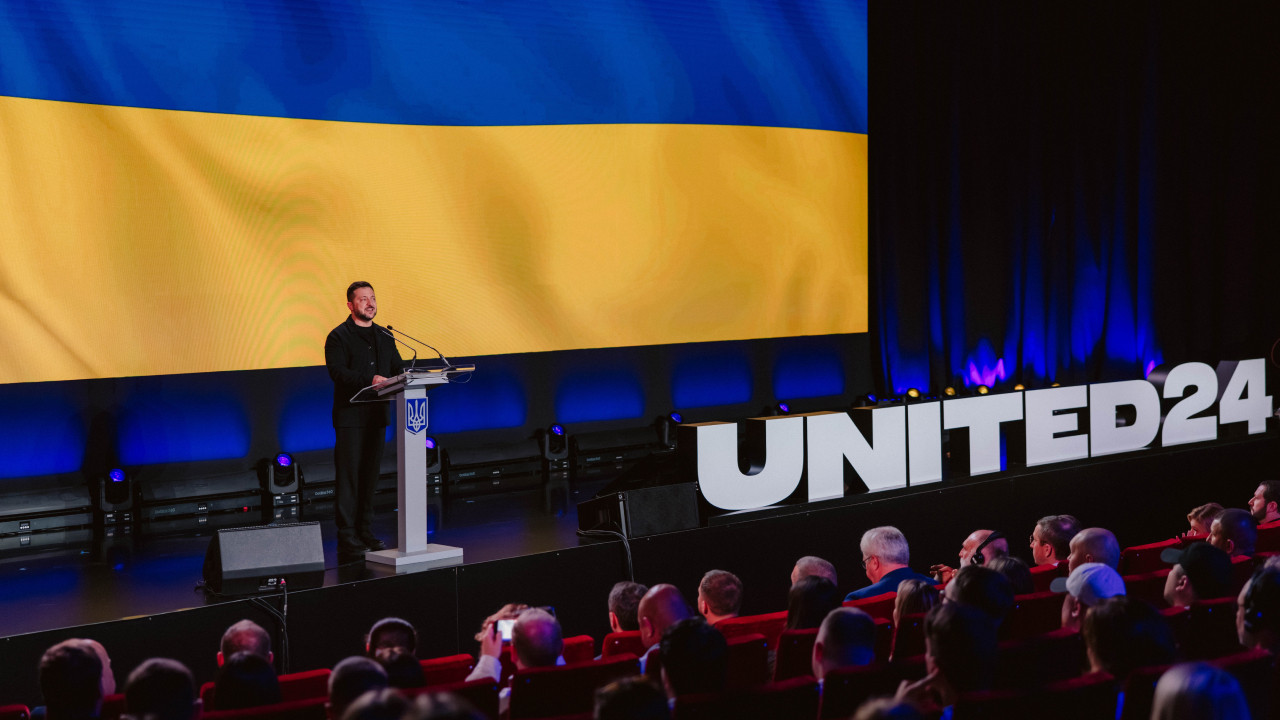
Впевненість у майбутньому України створюється вже сьогодні: Activitis про партнерство з UNITED24 та роль бізнесу під час війни

3 Серпня 2026
Activitis та Piraeus Bank запускають WEAGROBANK – цифровий фінансовий сервіс для аграріїв

30 Липня 2026
Коли рахунок стає фінансовим інструментом: як e-invoicing пришвидшує бізнес
24 Липня 2026
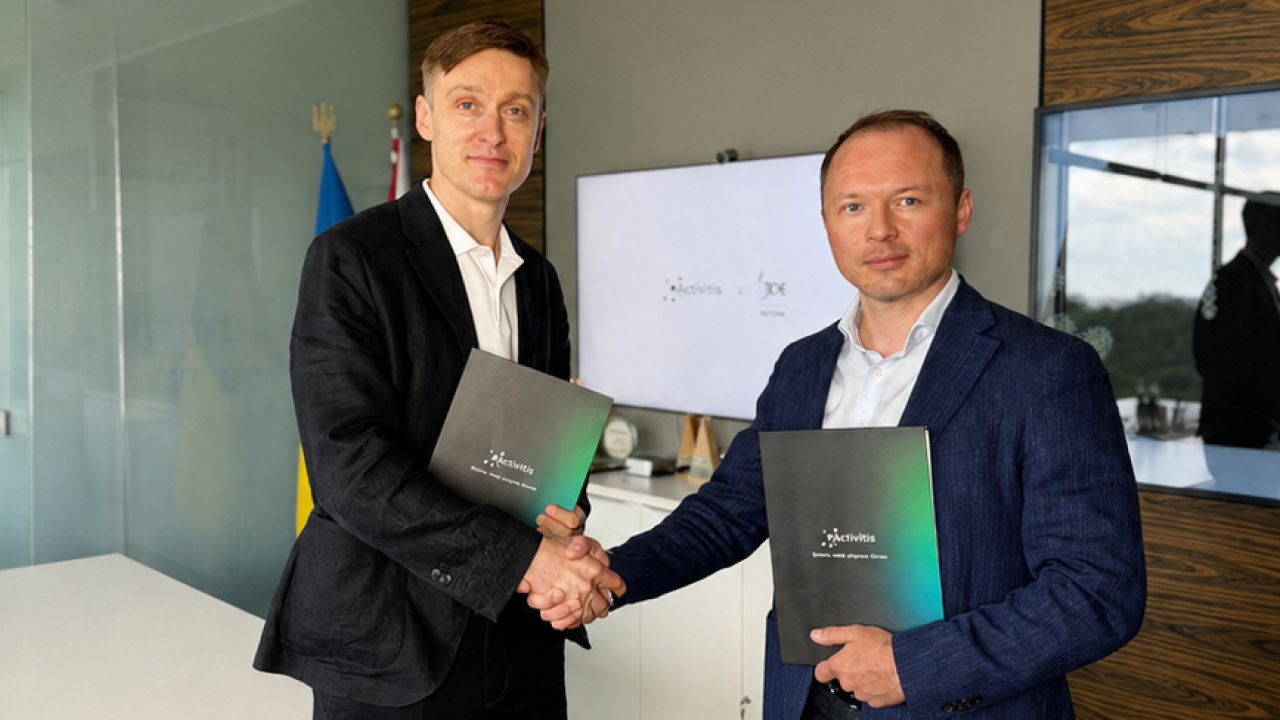
Activitis x JDE
10 Липня 2026
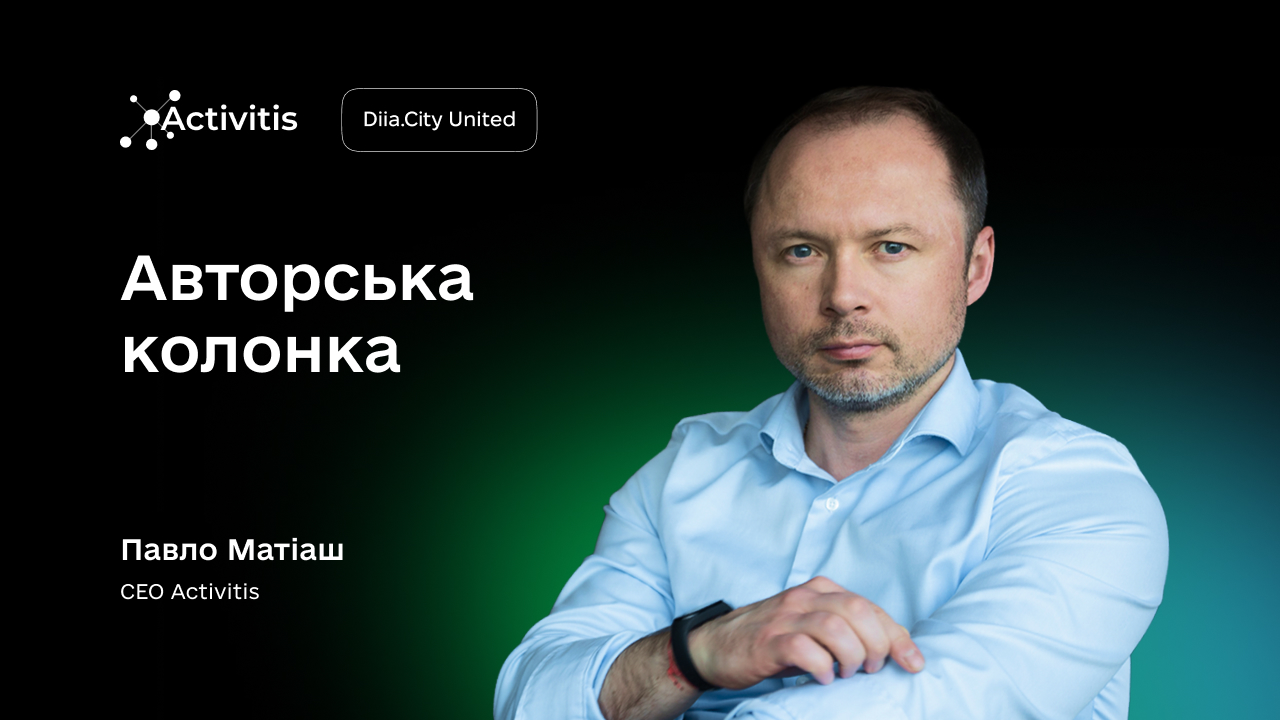
Корпоративні облігації: як інвестиції працюють у реальній економіці
8 Липня 2026
Activitis Builds Fintech Infrastructure for Ukrainian Businesses in Wartime

3 Липня 2026

